Garhwa: Nine years after its establishment, Engineers Academy, Garhwa, is marking an important milestone in its academic journey, with the institution putting into perspective a record that, according to figures shared by the academy, encompasses approximately 10,000 students taught, more than 2,000 selections and nearly 100 toppers across different academic and competitive examinations. Supported by a faculty network of around 25 regular and guest teachers, the academy’s ninth anniversary has emerged as an occasion to celebrate not merely institutional longevity but the expanding educational aspirations of students in Garhwa and adjoining areas.
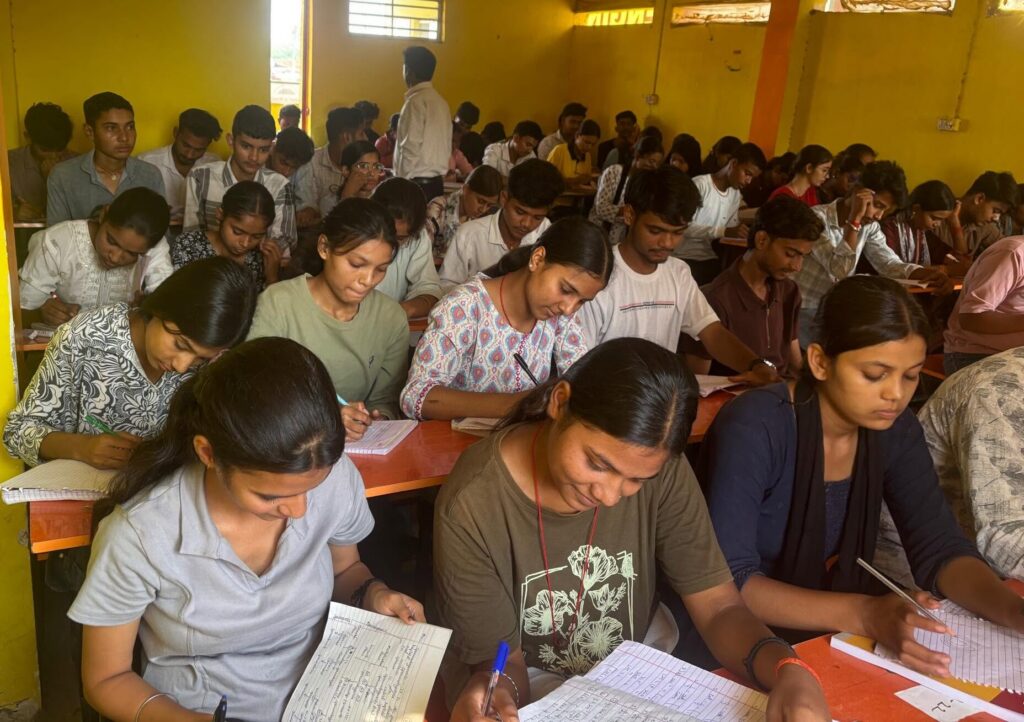
Established in 2017, Engineers Academy has developed its academic presence around school-level learning as well as preparation for competitive examinations, particularly in disciplines where Mathematics and Science constitute the foundational pillars. Over nine years, the institution says its classrooms have witnessed the academic journeys of approximately 10,000 students. While student enrolment and academic outcomes naturally vary from year to year, the cumulative figure provides an indication of the scale at which the institution has operated within Garhwa’s educational ecosystem.
The ninth anniversary, therefore, provides Engineers Academy with an opportunity to look simultaneously backwards and forwards. The figures of approximately 10,000 students, 2,000-plus selections and nearly 100 toppers constitute a record of the journey as presented by the institution; the next phase will be defined by how effectively those foundations are translated into stronger academic systems, wider opportunities and sustained learning outcomes.
The academy’s stated figure of 2,000-plus selections represents another important component of its nine-year academic record. The term “selection” can encompass different examinations and academic pathways, and the institution’s detailed examination-wise and year-wise break-up would be necessary to assess the figure more precisely. Nevertheless, the cumulative number reflects the increasingly competitive orientation of students seeking structured preparation within the district itself. The academy also places the number of students who have emerged as toppers at approximately 100, adding another dimension to its claimed academic record.
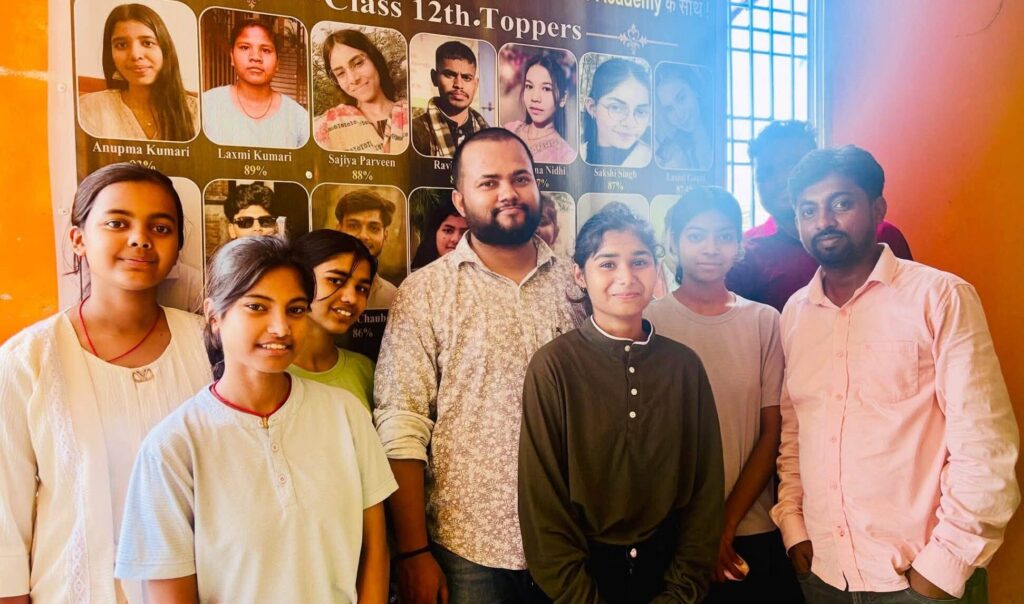
Behind these numbers is a faculty network comprising around 25 regular and guest faculty members. In an educational institution, numbers alone do not determine academic quality, but faculty strength can provide an important foundation for subject-specific instruction, mentoring and student support when appropriately organised. The presence of regular and guest teachers also indicates an academic model that seeks to combine continuity in classroom teaching with specialised expertise.
The significance of Engineers Academy’s journey becomes more apparent when placed against the broader educational circumstances of the region. Although, the district records literacy rate at 60.33 per cent, with male literacy at 72.19 per cent and female literacy at 47.58 per cent. The district’s population was approximately 13.23 lakh according to the same Census.
These are historical figures and do not represent the current literacy position of the district, but they remain useful statistical markers for understanding the educational landscape within which institutions such as Engineers Academy have evolved.
The transformation from basic literacy towards higher educational and professional aspirations represents a significant shift in the aspirations of students and families. Today’s students increasingly look beyond conventional educational milestones and seek opportunities in engineering, medicine, technology, management and other professional disciplines. National-level examinations such as JEE and NEET have consequently become part of the academic vocabulary even in districts far removed from the country’s major educational hubs.
This changing aspiration has simultaneously altered the role of coaching and academic support institutions. Competitive preparation is no longer confined to the transmission of syllabus content. Students require conceptual understanding, problem-solving ability, repeated practice, systematic testing, time management and the capacity to identify and correct academic weaknesses. The quality of mentoring and the consistency of academic engagement can therefore become as consequential as the availability of study material.
For students in a district such as Garhwa, the expansion of local academic institutions also has a geographical dimension. Access to structured preparation closer to home can reduce the necessity of immediate migration to major coaching centres, while enabling students to remain within their existing educational and family environment. This does not eliminate the challenges of competitive preparation, but it can broaden the range of educational options available to local families.
The emergence of technology-enabled education has further reshaped this environment. Students today have access to online lectures, digital study material, examination platforms and virtual academic resources that were not readily available to earlier generations. Yet technology, by itself, cannot guarantee learning. Its effectiveness depends upon how intelligently it is integrated with classroom teaching, assessment, mentoring and individual attention.
That is why the human dimension of education remains central to the story. Teachers continue to occupy a position that extends beyond the classroom. They explain difficult concepts, monitor progress, identify learning gaps and, perhaps most importantly, help students sustain motivation during periods when competitive preparation becomes demanding. A strong academic culture is ultimately created through the interaction of teachers and students rather than through infrastructure alone.
The academy’s approximately 10,000-student cumulative reach over nine years also points towards the scale of educational demand that exists in and around Garhwa. Every student does not necessarily pursue the same examination or career, and educational success cannot be reduced exclusively to selection figures. Nevertheless, the growing participation of students in structured academic programmes reflects a wider societal belief that education can provide a pathway towards professional mobility and economic opportunity.
The reported figure of over 100 toppers similarly forms part of the institution’s stated academic record. A more detailed year-wise record identifying the examinations, ranks, marks and institutions involved would provide greater statistical clarity and allow the achievement to be assessed examination by examination. For an institution entering its tenth year, maintaining such transparent academic documentation can itself become an important component of institutional credibility.
The absence of a scholarship figure in the data presently available also provides an opportunity for future expansion. Scholarships, need-based fee assistance and merit-support programmes can potentially widen access to structured preparation for students whose academic potential may not always be matched by their financial circumstances. Such initiatives, when supported by transparent criteria, can strengthen the inclusive character of an educational institution.
The larger story is the emergence of an educational culture in which ambition is increasingly detached from geography. A student does not necessarily have to begin the journey in a metropolitan city to aspire towards a national-level examination. With appropriate teaching, disciplined preparation, parental support and access to academic resources, students from smaller districts can also participate in the country’s highly competitive educational pathways.
That transformation, however, requires sustained investment in teaching quality, academic transparency and student welfare. Educational institutions must continually evolve as examination patterns change, technology advances and the expectations of students and parents become more sophisticated. Nine years of continuity can provide an institutional foundation, but maintaining relevance requires continuous academic renewal.
Ultimately, however, the enduring significance of an educational institution lies not only in statistics but in the aspirations represented by those statistics. Behind every selection is a student who invested time and effort; behind every topper is a family and a teacher who contributed to the journey; and behind every classroom is the possibility of another student discovering the confidence to pursue a demanding academic goal.
Nine years, therefore, are not simply nine years on a calendar. For Engineers Academy, they represent thousands of individual educational journeys and a continuing engagement with the aspirations of Garhwa’s young generation.
As the institution enters its next chapter, the challenge will be to convert accumulated experience into stronger academic systems, preserve the discipline of classroom learning, embrace useful technological innovations and continue widening the horizon of opportunity for students.