Garhwa: Jharkhand Governor Santosh Kumar Gangwar, during his visit to Garhwa, underlined the need to preserve the region’s rich spiritual and cultural heritage while simultaneously preparing its younger generation to navigate an increasingly technology-driven world. His engagements in the district brought together two important facets of Garhwa’s identity—its deep-rooted traditions of faith and culture and its growing aspirations in higher education—with the Governor emphasising that heritage, knowledge, innovation and social responsibility must collectively shape the region’s future.
The Governor began his engagement in the region with a visit to Shri Banshidhar Nagar (Nagar Untari), where he offered prayers at the revered Shri Banshidhar Temple and prayed for the happiness, peace, prosperity and well-being of the people of Jharkhand. Describing the temple as an important centre of faith, spirituality and cultural consciousness, Gangwar emphasised the need for its systematic development and preservation.
He also stressed that strengthening the infrastructure and facilities associated with the temple could reinforce the religious and cultural identity of the area while also opening greater possibilities for religious tourism and the local economy.
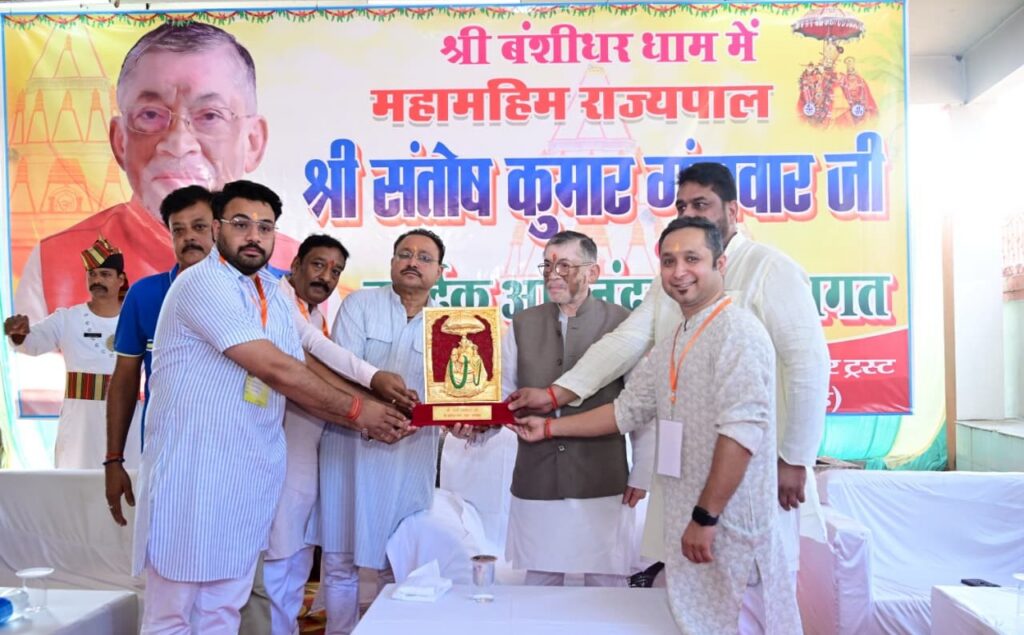
Referring to Garhwa’s broader cultural landscape, the Governor said the district’s natural environment, folk traditions, cultural practices and spiritual institutions constitute an important part of its distinctive identity. The Shri Banshidhar Temple, he observed, is not merely a place of worship but an important component of Jharkhand’s spiritual and cultural heritage.
Its appropriate development, he said, should therefore be viewed within the larger framework of cultural conservation and tourism promotion. Greater attention to heritage sites, coupled with improved infrastructure and visitor facilities, can help enhance the visibility of the region and generate opportunities for communities associated with tourism and allied economic activities.
From the spiritual heritage of Shri Banshidhar Nagar, the Governor’s programme moved towards the educational aspirations of the region as he addressed the first convocation of Babu Dinesh Singh University. Describing the inaugural convocation as a significant milestone in the life of any university, Gangwar said such an occasion is not confined to the ceremonial distribution of degrees. It is also an opportunity for an institution to reflect upon its journey, assess its achievements and contemplate the direction in which it intends to move in the years ahead.
For the graduating students, he said, the convocation should signify much more than the completion of formal education. The real purpose of education, according to the Governor, is realised when acquired knowledge becomes visible in an individual’s personality, conduct and actions and when that knowledge is ultimately translated into benefits for society.
He urged the students to carry the values and learning acquired at the university into their professional and social lives, stressing that their achievements and conduct would also contribute to establishing the reputation and identity of the institution from which they graduated.
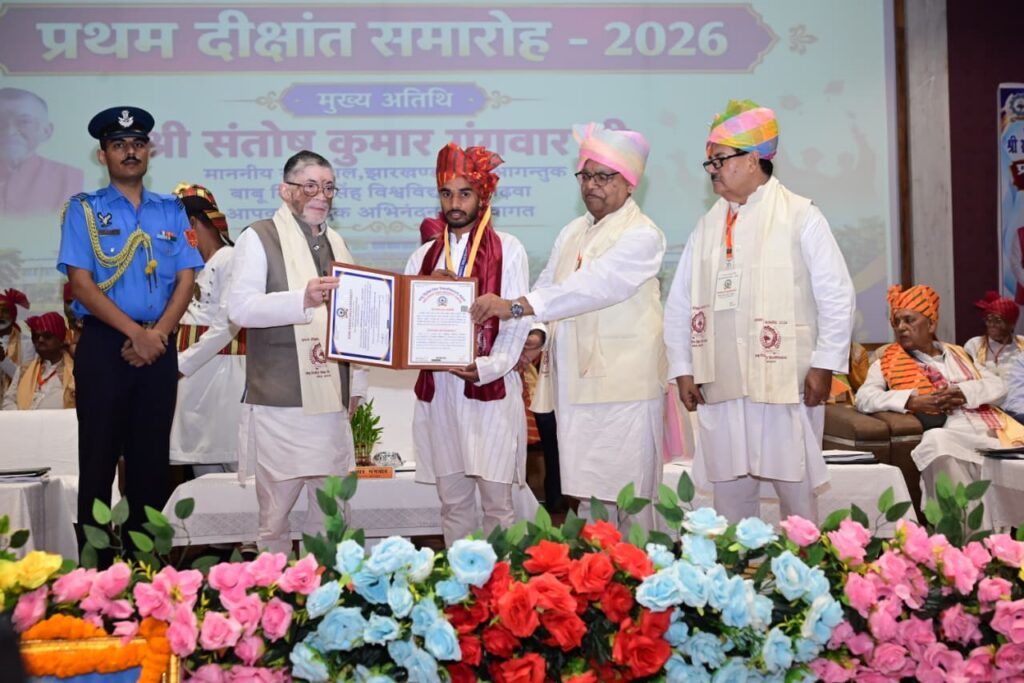
Gangwar placed particular emphasis on the extraordinary pace of technological change taking place across the world. Artificial intelligence, digital technology, biotechnology, space science and other emerging fields, he said, are rapidly transforming both everyday life and the nature of work. In such an environment, young people cannot afford to remain confined to conventional knowledge or established methods.
They must develop the confidence to learn continuously, experiment with new ideas, adapt to changing circumstances and confront emerging challenges with creativity and determination, he added further.
The Governor also stressed that technological advancement must be accompanied by social responsibility. Knowledge and skills, he said, acquire greater significance when they are employed to address real-world problems and create wider social value. He called upon the university to strengthen its focus on research, innovation, skill development, entrepreneurship and socially relevant education so that its students are equipped not only for employment but also for meaningful participation in a rapidly evolving economy.
Reflecting on the role of universities in shaping their institutional reputation, Gangwar said the true standing of an institution cannot be determined merely by the scale of its buildings or physical infrastructure. A university earns lasting recognition through the quality of its education, the achievements of its students, the strength of its research, its capacity for innovation and the contribution it makes to society.
He called upon Babu Dinesh Singh University to establish a distinctive identity based on academic excellence, transparency and quality education while ensuring that its students receive value-based and employment-oriented learning.
The Governor also drew attention to the immense reservoir of talent available in villages and smaller towns. He said there is no shortage of capable and ambitious young people in rural India; what is often required is an enabling ecosystem comprising opportunities, guidance, resources and confidence. In this context, he said, Babu Dinesh Singh University could play a significant role in expanding access to higher education for students from rural communities and economically weaker sections.
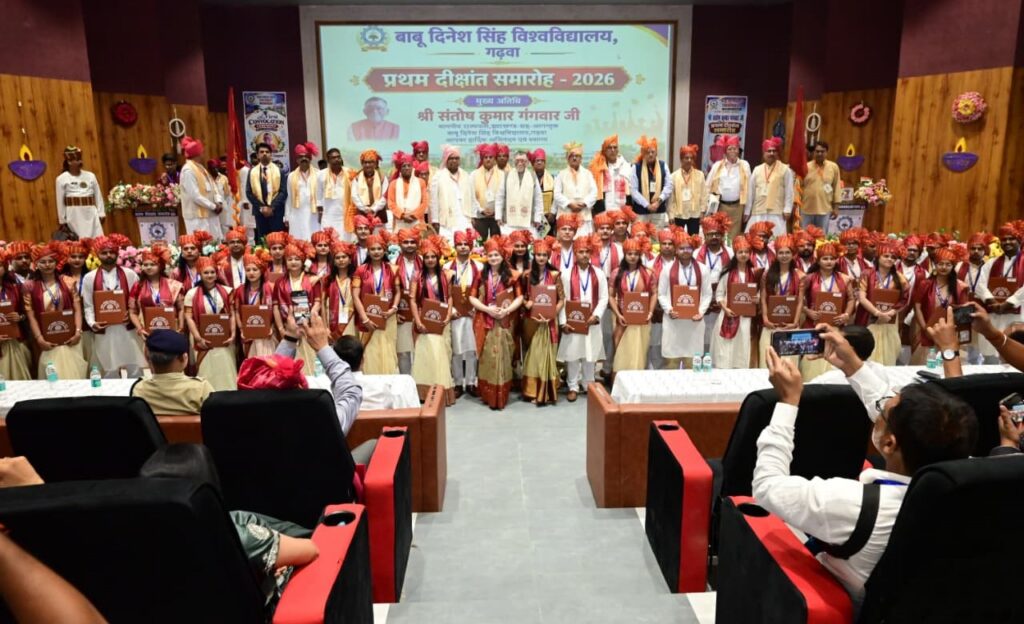
Providing education, however, should not remain limited to the award of degrees, Gangwar suggested. Universities have a wider social responsibility to create confidence, develop employable skills, nurture entrepreneurship and encourage students to contribute to their communities. For a university situated in a region such as Garhwa, aligning academic programmes and research with local needs could help connect higher education more closely with regional development.
The Governor emphasised the importance of credibility and academic quality, particularly in the context of private universities. He called for full compliance with the rules, standards and guidelines prescribed by the University Grants Commission and the state government, stressing that institutional transparency and adherence to academic norms are essential for sustaining public confidence in higher education.
His visit also highlighted the potential convergence between Garhwa’s cultural heritage and its educational ambitions. The Shri Banshidhar Temple represents a deeply rooted spiritual and cultural inheritance, while Babu Dinesh Singh University reflects the aspirations of a younger generation seeking new avenues of knowledge, employment, innovation and social mobility. For Garhwa, the simultaneous preservation of its cultural legacy and expansion of educational opportunities could form an important part of its broader development trajectory.
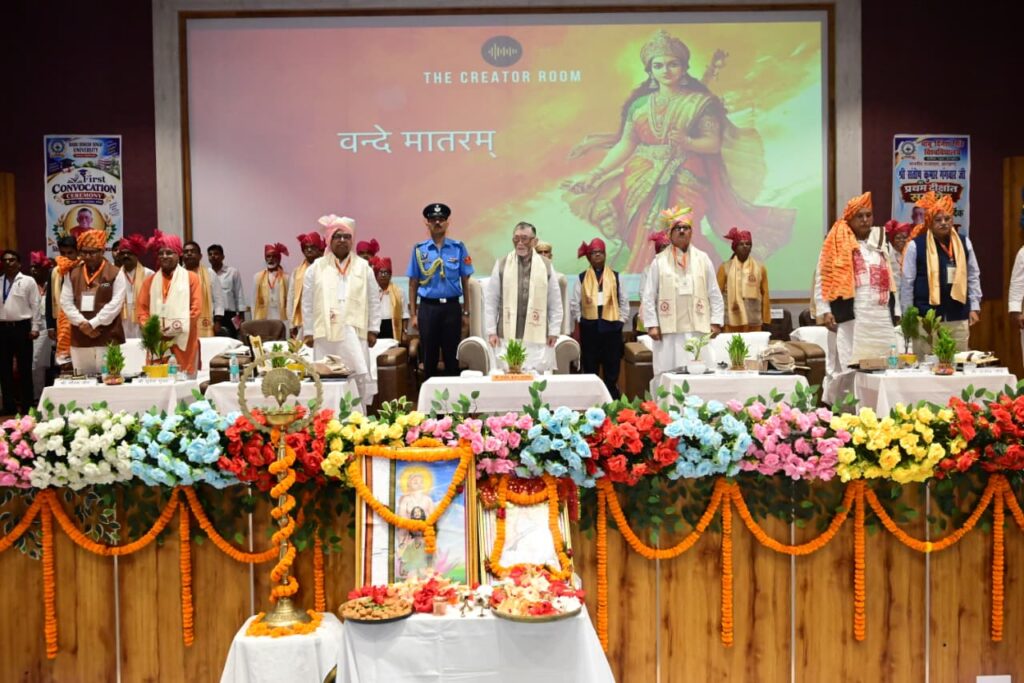
Concluding his message to the graduating students, Gangwar urged them to establish the identity of Babu Dinesh Singh University through their conduct, achievements and responsible engagement with society. Their degrees, he indicated, should not mark the end of their learning but the beginning of a larger responsibility—to transform knowledge into action, opportunity into achievement and individual success into a contribution to society. In that sense, the Governor’s Garhwa visit carried a larger message: the region’s future will depend on how effectively it can preserve the strength of its heritage while creating an educational and technological ecosystem capable of preparing its young people for the challenges of tomorrow.