Hazaribagh: Entrepreneurship rarely begins with a grand success story. More often, it starts with an uncertain decision, limited resources and a willingness to do work that others may hesitate to undertake. For Niranjan Sinha, proprietor of Sangini Enterprises in Hazaribagh, the journey from the corporate world to entrepreneurship has been a story of perseverance, gradual expansion and the courage to explore new opportunities.
From working in the banking and insurance sectors to personally visiting households to repair and install water purifiers, Sinha’s professional journey has taken him through experiences that demanded patience, adaptability and a willingness to start from the ground up. Today, his enterprise operates across domestic, commercial and industrial water-purification services and has expanded into electric mobility with a range of scooters marketed under the Sangini Enterprises brand.
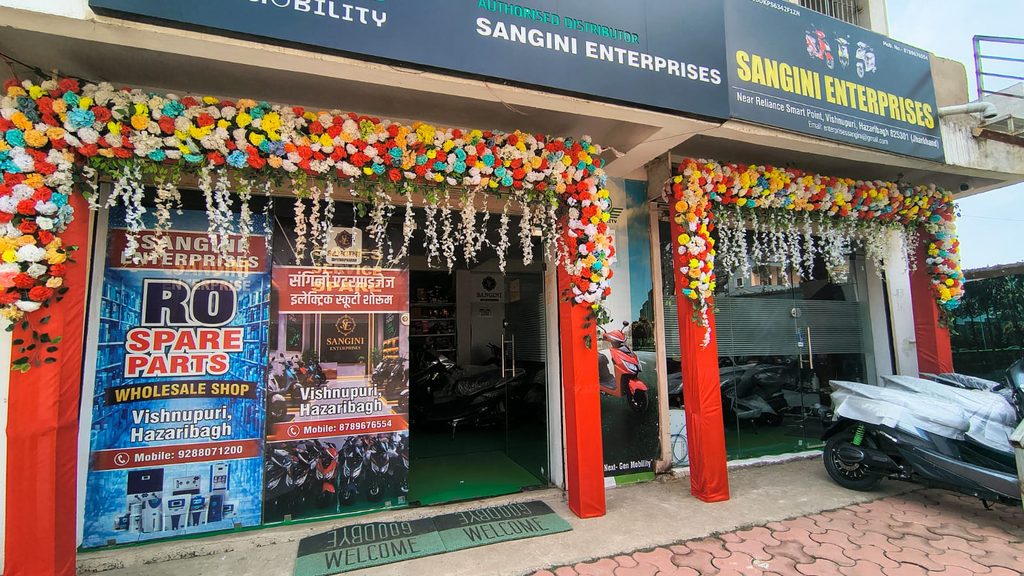
The business has reportedly sold more than 200 electric scooters over the past year, offering five variants with prices starting at approximately ₹55,000. The development represents a significant new chapter for an entrepreneur whose business began with doorstep servicing and gradually grew into a diversified enterprise serving customers across Jharkhand and adjoining region of Bihar.
His story carries a message for aspiring entrepreneurs in smaller cities: a successful business need not begin with substantial capital or an elaborate infrastructure. Sometimes, it begins by recognising a practical need, earning customers’ trust and having the determination to keep moving forward.
From Corporate Employment to the Uncertainties of Entrepreneurship
Sinha began his professional career with ICICI Bank, where he worked from 2005 to 2008. He subsequently served as a Sales Manager with Reliance Life Insurance and Birla Sun Life Insurance until 2012. These assignments gave him experience in customer relationships, sales and professional management before he decided to establish a business of his own.
In 2012, he entered the water-purification sector by starting an RO servicing business. The decision brought him into an entirely different professional environment, one in which the responsibilities of an entrepreneur extended well beyond planning and customer acquisition.
During the initial years, Sinha personally visited customers’ homes to install and repair water purifiers. He recalls that the work sometimes involved uncomfortable social experiences, including being casually referred to as an “RO mechanic”. Installation assignments also required drilling walls and fitting equipment inside homes, often involving practical arrangements with household members.
For someone who had worked in formal corporate settings, these experiences demanded a change in perspective. The priority was no longer professional designation but the ability to solve customers’ problems and build a sustainable source of income.
Rather than allowing such experiences to discourage him, Singh continued working on the business. His early years illustrate an important lesson about entrepreneurship: dignity of work is not determined by the nature of a task or the social recognition it attracts, but by the commitment with which it is performed. The willingness to begin at the ground level became an important part of his entrepreneurial journey.
Identifying Market Gap and Building a Business Around it
The initial RO servicing operation gradually developed into a broader business. A significant milestone came in 2020, when Singh obtained GST registration and began focusing more systematically on corporate customers.
Sangini Enterprises subsequently expanded its activities to cover domestic, commercial and industrial RO systems, including equipment sales, servicing and spare parts. The expansion was driven by an understanding of the practical requirements of customers who needed reliable equipment as well as convenient access to maintenance and replacement components.
Sinha identified a particular difficulty in the local market: customers frequently depended on technicians visiting their homes to obtain RO spare parts. Dedicated retail options were limited, making it inconvenient for consumers who wanted to purchase components independently. And to address this gap, Sangini Enterprises began offering RO spare parts through its retail operations at prices Sinha describes as wholesale rates. The intention was to make components more accessible while combining retail sales with technical assistance and servicing.
This approach reflects a central principle of entrepreneurship: opportunities often emerge from everyday inconveniences that remain insufficiently addressed. A business that understands what customers need, and why existing arrangements may not be convenient, can build its identity around providing a practical alternative. Over time, the enterprise expanded beyond individual households to commercial establishments and industrial customers, requiring a broader range of products, technical capabilities and service arrangements.
Serving Institutions and Expanding Beyond Hazaribagh
According to Sinha, Sangini Enterprises has undertaken RO plant-related servicing assignments at the NTPC campus in Tandwa, the Amrapali project of Central Coalfields Limited in Tandwa, VPR Mining in Latehar, and facilities associated with the Border Security Force, Central Reserve Police Force and Jharkhand Police Academy. Hospitals and other corporate customers have also been part of its reported service portfolio. The business operates in Hazaribagh and provides services in Ramgarh, Chatra and Koderma, while its industrial RO plant-related work extends across Bihar and Jharkhand, Sinha says.
Institutional and industrial water-treatment systems demand a different level of coordination from household installations. Equipment maintenance, component replacement, technical troubleshooting and timely service can be critical to the continuity of operations. For a locally based enterprise, serving such customers requires more than the ability to sell equipment. It calls for dependable service delivery, product knowledge, suitable spare-parts availability and the capacity to respond to varied operational requirements.
The expansion of Sangini Enterprises into these markets demonstrates how a business can gradually broaden its reach by developing capabilities around an established area of expertise. It also highlights the potential for district-level enterprises to participate in commercial and institutional supply chains.
Sangini Enterprises Enters the Electric-Mobility Market
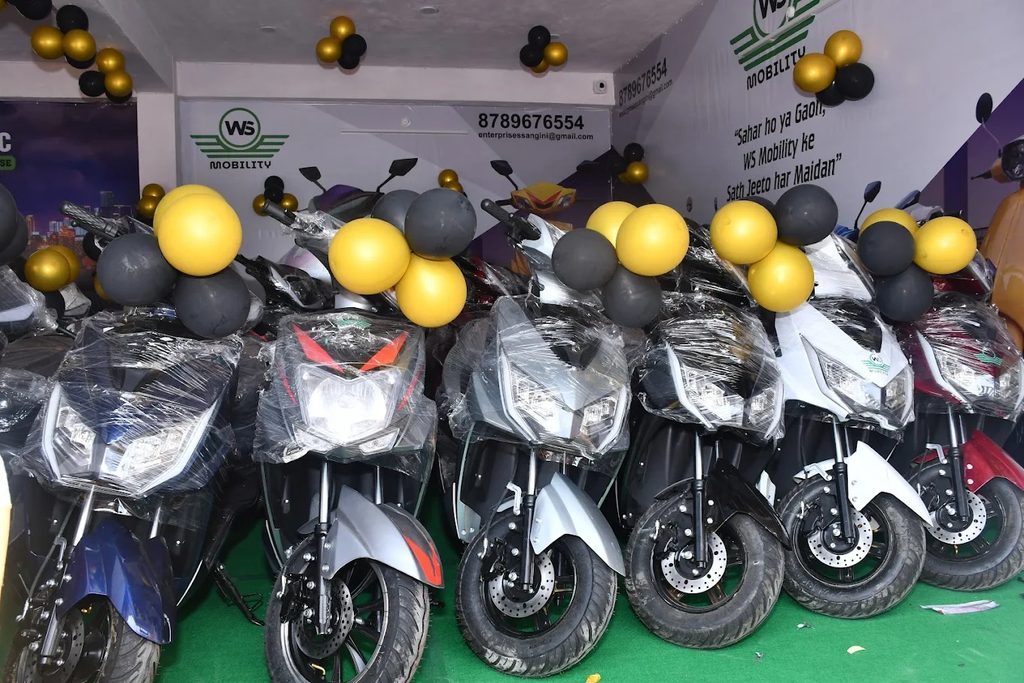
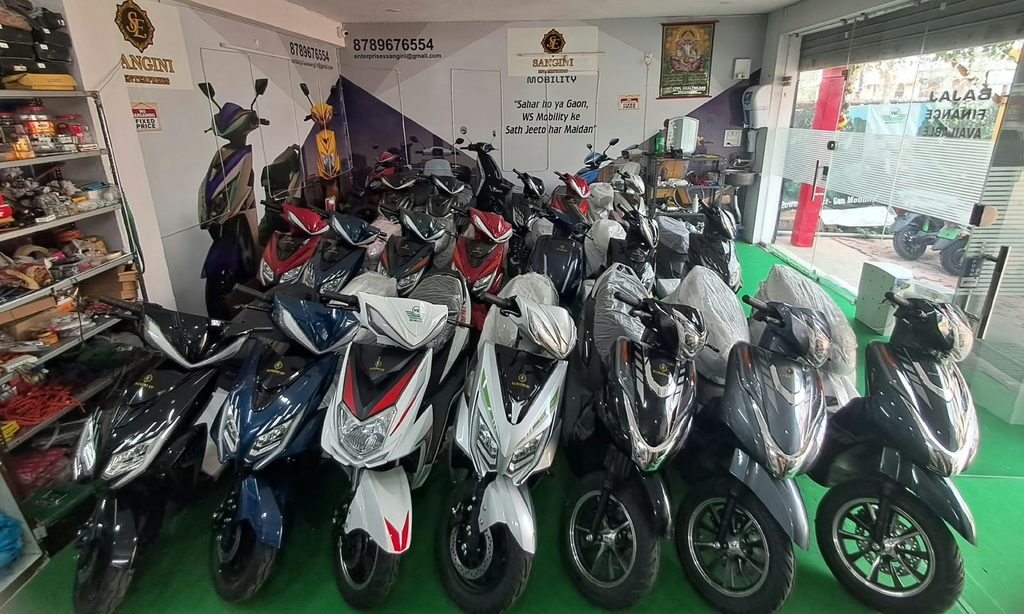
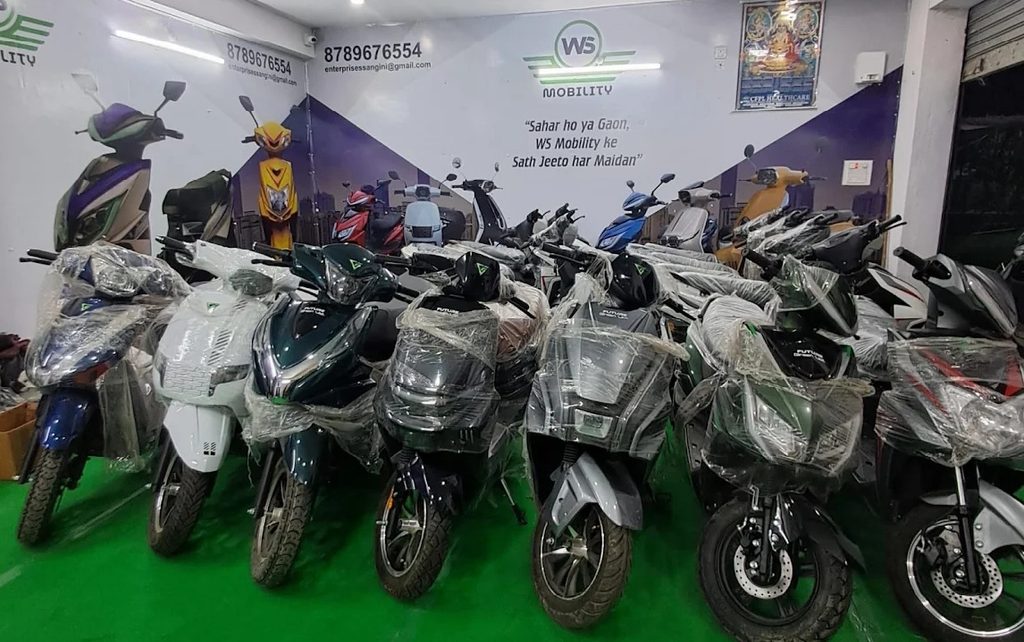
In 2025, Sinha diversified into electric mobility by opening an electric-scooter showroom in Hazaribagh. The move brought a new dimension to the enterprise, connecting its business activities with a transport sector undergoing technological change. The showroom offers five types of electric scooters, with prices starting at approximately ₹55,000. According to Sinha, the enterprise has sold more than 200 scooters over the past year, indicating an encouraging response to its offerings in the local market.
A notable feature of the initiative is the development of an electric-scooter brand under the name Sangini Enterprises. The scooters are manufactured by a third party and marketed under Sinha’s own brand identity. This arrangement allows him to participate in the electric-mobility market without establishing a manufacturing facility of his own. For a small-town entrepreneur, the model offers a route into an emerging sector through product selection, brand development, retail distribution and customer engagement. It also illustrates how entrepreneurship can extend beyond conventional manufacturing or trading arrangements to include the development of a distinct market identity.
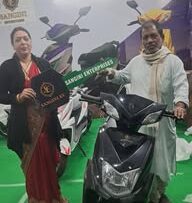
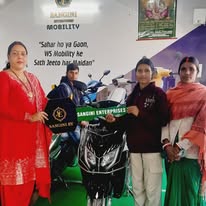
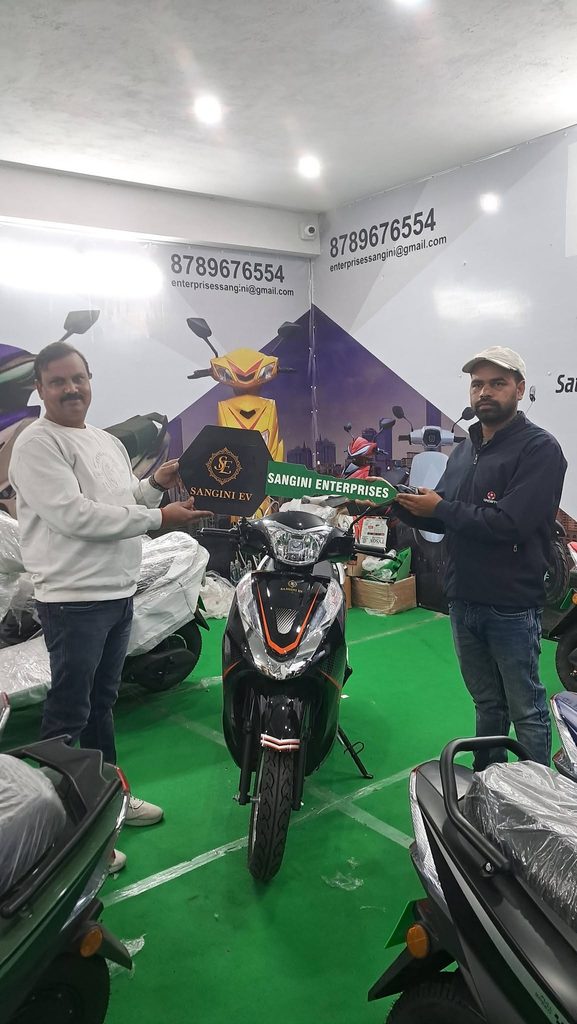
The reported sales of more than 200 scooters provide an initial measure of the venture’s progress. However, sustaining growth will depend on product quality, transparent information about specifications and warranties, reliable after-sales arrangements and the ability to address customer concerns.
For buyers, the starting price is only one consideration. Battery performance, charging requirements, vehicle range, maintenance costs and the terms of warranty coverage are also important when evaluating an electric scooter. By bringing the electric-scooter business under the Sangini Enterprises name, Singh has sought to build a recognisable identity while extending the enterprise into a new category of consumer products.
An Entrepreneurial Opportunity with an Environmental Dimension
Electric mobility offers an opportunity to connect business development with environmental considerations. Electric scooters produce no tailpipe emissions during operation and can help reduce local exhaust pollution compared with conventional petrol-powered scooters. Their overall environmental impact, however, depends on factors including how electricity is generated, battery production and disposal, and the vehicle’s useful life.
For consumers who regularly travel short distances, electric two-wheelers may also offer potential savings on running costs, depending on electricity tariffs, vehicle efficiency, purchase price and maintenance requirements.
In a city such as Hazaribagh, local retailers can contribute to the transition by making electric vehicles more accessible and helping customers understand their practical advantages and limitations. The availability of locally accessible sales and service support can be an important consideration for buyers who are unfamiliar with the technology. Sinha’s entry into this market therefore represents both a business diversification decision and an opportunity to participate in the wider shift towards cleaner mobility.
Nevertheless, the long-term environmental and commercial value of the venture will depend on responsible product selection, adequate customer guidance, appropriate battery-handling arrangements and dependable after-sales service. Environmental sustainability is strengthened when consumers have the information and support needed to make informed choices and use products responsibly throughout their life cycle.
Building Livelihoods Through Local Enterprise
Sangini Enterprises currently provides employment to approximately seven to eight people in Hazaribagh, according to Sinha. Its operations span sales, servicing and related business activities.
For smaller cities, enterprises of this kind can create opportunities for local employment and practical skill development. Technical servicing, installation, inventory management, sales and customer support are all functions that can contribute to the development of a local business ecosystem.
As the enterprise expands, its ability to train personnel, maintain service standards and manage customer relationships will be important to its long-term sustainability. Growth also brings financial and operational responsibilities, including working-capital management, inventory planning and the need to respond promptly to customers across different locations.
The experience of Sangini Enterprises demonstrates that entrepreneurship can contribute to local economic activity even without beginning at a large scale. A business that starts with a limited-service offering can gradually create a wider range of opportunities as its customer base and capabilities develop.
For young people who aspire to establish their own ventures, the lesson is not that success comes easily, but that incremental progress can be achieved by understanding the market, remaining open to learning and developing a reputation for dependable service.
The Road Ahead: From Persistence to Possibility
From its beginnings in RO servicing in 2012 to its expansion into corporate and industrial water-purification solutions and electric scooters in 2025, Sangini Enterprises has evolved through a series of incremental decisions. Each stage has required Sinha to respond to a different set of challenges, from undertaking household service visits to developing a broader customer base and introducing a new product category. His journey also demonstrates that professional experience can provide a foundation for entrepreneurship without determining its eventual direction. The transition from banking and insurance to running a technical service business demanded practical learning, while subsequent expansion required an understanding of changing customer needs and new market opportunities.
The next phase of growth will depend on the enterprise’s ability to maintain quality, strengthen its service network and build confidence in its electric-scooter brand. Independent verification of its sales figures, institutional assignments and business performance would provide a clearer measure of its progress. For Hazaribagh and the wider region, the larger significance of such ventures lies in their potential to connect local enterprise with changing consumer needs, employment opportunities and emerging technologies.
Niranjan Sinha’s story is ultimately a reminder that entrepreneurship is not merely about starting a business; it is about the willingness to adapt, the discipline to continue through difficult periods and the determination to create value for customers. From the early days of repairing water purifiers at customers’ homes to marketing electric scooters under his own brand, Singh has pursued a path shaped by persistence and diversification. His experience offers an encouraging message to aspiring entrepreneurs: a new beginning need not be defined by where one starts, but by the willingness to learn, work and build towards a clearer vision.
For Sangini Enterprises, the challenge now is to turn its expanding portfolio into a durable and trusted business. For other aspiring entrepreneurs, its journey illustrates how a local initiative, built patiently around practical needs, can create opportunities that extend beyond the original idea.