Sharadiya Navratri is one of the most revered festivals of the Indian Sanatan tradition. Beyond its religious significance of worship, fasting, and prayer, Navratri represents a profound journey of self-discipline, inner transformation, courage, compassion, and spiritual awakening. The nine days are dedicated to the worship of the nine manifestations of Goddess Durga, collectively known as Navdurga. Each form symbolizes a distinct virtue and offers valuable lessons that remain deeply relevant in contemporary life.
In an age marked by intense competition, social pressures, mental stress, and an increasing desire for instant success, the teachings embodied in the nine forms of Navdurga offer timeless guidance. They encourage individuals, especially the younger generation, to cultivate resilience, remain committed to their goals, confront challenges with courage, and balance achievement with humility. While these forms are rooted in sacred traditions and scriptural narratives, their broader significance extends to character-building, ethical living, and personal development.
The classical foundation of Navdurga finds expression in the Devi Kavach, traditionally recited alongside the Durga Saptashati, where the nine divine forms are described as Shailputri, Brahmacharini, Chandraghanta, Kushmanda, Skandamata, Katyayani, Kalaratri, Mahagauri, and Siddhidatri. Each deity is worshipped on a specific day of Navratri and represents a unique stage in the spiritual and moral evolution of an individual.
The journey begins with Maa Shailputri, the daughter of the Himalayas, who symbolizes firmness, stability, and unwavering determination. Just as a mountain stands unshaken amidst storms, Shailputri inspires individuals to remain steadfast in the face of adversity. In a time when many abandon their goals at the first sign of difficulty, her teachings remind us that meaningful achievements require a strong foundation of patience, persistence, and conviction.
The second form, Maa Brahmacharini, represents penance, discipline, and dedication. Associated with Goddess Parvati’s rigorous austerities in pursuit of Lord Shiva, she exemplifies the power of commitment and self-control. Her message is particularly relevant for students, professionals, athletes, and entrepreneurs, emphasizing that talent alone does not guarantee success. Consistent effort, disciplined practice, and perseverance transform aspirations into accomplishments.
Maa Chandraghanta, worshipped on the third day, embodies courage, vigilance, and readiness to stand against injustice. Her warrior-like form serves as a reminder that humility should never be confused with helplessness. In personal and social life, one must possess the courage to defend dignity, protect the vulnerable, and oppose wrongdoing. Her teachings advocate the ethical use of strength, not for domination or pride, but for justice, protection, and social harmony.
The fourth manifestation, Maa Kushmanda, is associated with the creative force of the universe. She symbolizes innovation, optimism, and the power to create possibilities even amidst darkness. In today’s rapidly evolving world, creativity has become an essential driver of progress across fields such as science, technology, literature, agriculture, healthcare, and entrepreneurship. Kushmanda inspires individuals not merely to identify problems but to seek meaningful solutions with a positive and constructive mindset.
Maa Skandamata, the mother of Lord Kartikeya, reflects the values of nurturing, responsibility, and compassionate leadership. Her divine motherhood symbolizes more than familial affection; it represents guidance, sacrifice, and the transmission of values. In an increasingly individualistic society, Skandamata reminds us that true success is incomplete without sensitivity towards family, society, and future generations. Respect for parents, care for children and elders, and concern for social well-being remain indispensable pillars of a healthy civilization.
The sixth form, Maa Katyayani, is a powerful symbol of self-confidence, justice, and women’s empowerment. Revered as the destroyer of evil forces, she represents the strength required to challenge injustice and uphold righteousness. Her message resonates strongly in modern society, where issues of gender equality, education, safety, and economic empowerment of women continue to shape public discourse. Katyayani teaches that genuine reverence for feminine power lies not only in worship but also in ensuring dignity, opportunity, security, and equal participation for women in every sphere of life.
The formidable Maa Kalaratri, worshipped on the seventh day, personifies fearlessness in the face of adversity. Although depicted in a fierce form, she is revered as a benevolent protector of devotees. Her symbolism is particularly meaningful in a world where individuals often struggle with uncertainty, failure, emotional distress, and social challenges. Kalaratri teaches that courage is not the absence of fear but the determination to move forward despite it. Failures, setbacks, and disappointments are not final verdicts on one’s abilities but opportunities for growth and renewal.
On the eighth day, devotees worship Maa Mahagauri, the embodiment of purity, peace, and self-refinement. Her radiant form signifies inner cleanliness as much as external purity. In modern life, true purity extends beyond rituals and appearances. It includes honesty, integrity, respect for others, responsible conduct, and ethical decision-making. In the digital era, Mahagauri’s teachings also encourage responsible use of technology, protection of privacy, and restraint from actions that may harm the dignity and reputation of others.
The Navratri journey culminates with Maa Siddhidatri, the bestower of wisdom and spiritual fulfillment. She symbolizes the realization of potential through knowledge, devotion, and continuous self-improvement. Her teachings underscore that learning is a lifelong process and that true success is incomplete without humility and responsibility. Knowledge achieves its highest purpose when it contributes to the welfare of family, society, and the nation. Siddhidatri reminds us that the highest accomplishment is not personal glory but the meaningful application of one’s abilities for collective good.
Viewed collectively, the nine forms of Navdurga present a comprehensive philosophy of life. They represent determination, discipline, courage, creativity, responsibility, justice, fearlessness, purity, and wisdom. These values remain as relevant today as they were centuries ago, offering guidance for individuals seeking balance between material progress and moral development.
The spiritual essence of Navratri is beautifully reflected in the celebrated verse: “Ya Devi Sarvabhuteshu Shaktirupena Samsthita, Namastasyai Namastasyai Namastasyai Namo Namah.”. This invocation recognizes the Divine Mother as the universal force dwelling within all beings. In a broader cultural sense, it encourages humanity to acknowledge the inherent dignity, strength, and potential present in every individual.
Therefore, Sharadiya Navratri is far more than a festival of ritual observance. It is an opportunity for introspection, self-discipline, and ethical renewal. Lighting a lamp before the Goddess holds meaning only when accompanied by the resolve to overcome anger, ego, greed, envy, and injustice within ourselves. The true celebration of Navratri lies in transforming devotion into conduct, faith into values, and worship into service.
When strength is guided by wisdom, success by humility, freedom by responsibility, and faith by righteousness, the deeper message of Navdurga becomes truly meaningful. That enduring message continues to inspire modern generations to remain connected to their cultural roots while embracing the challenges and opportunities of contemporary life with balance, purpose, and integrity.
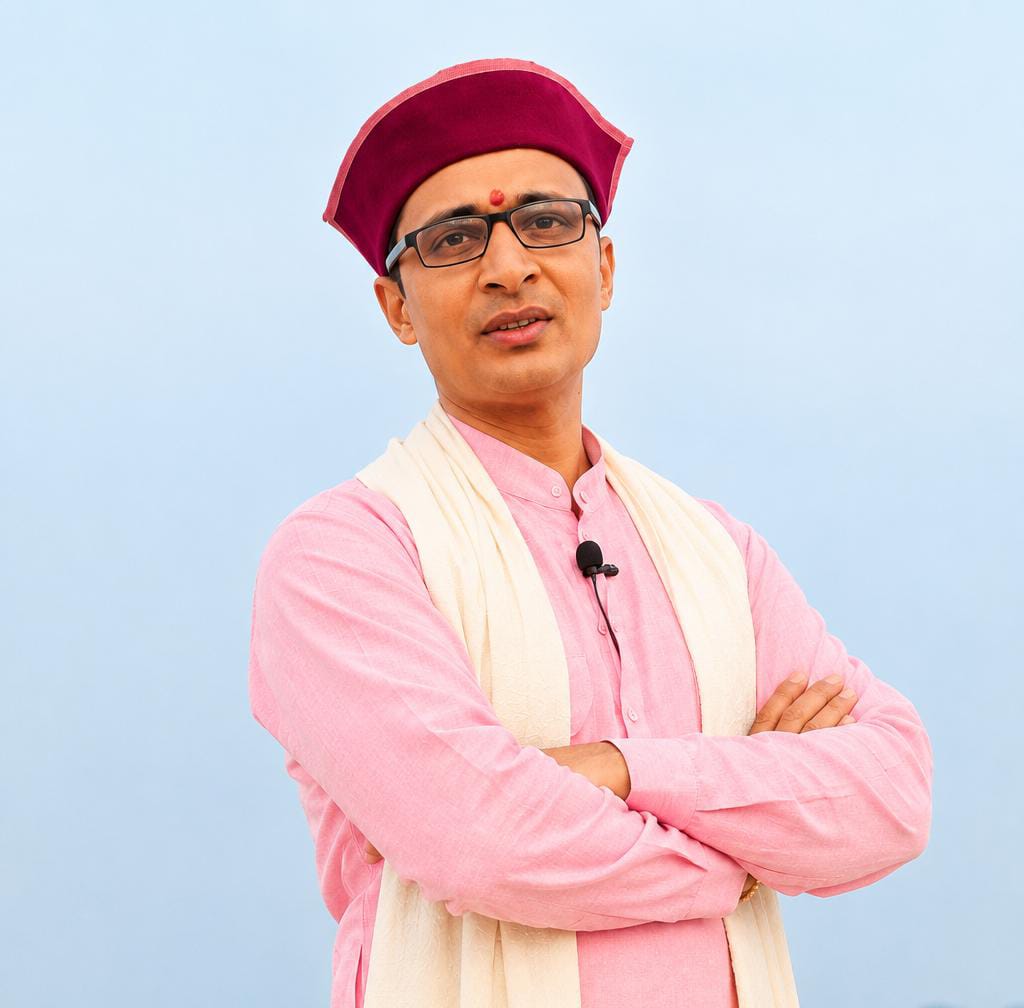
Arun Kumar Mishra, an acclaimed astrologer and author of Jyotish: Jeevan Path Ka Vigyan, brings the ancient science of Jyotish to life with remarkable clarity and depth. Drawing upon decades of learning and reflection, he illuminates the intricate connection between karma, destiny, and personal evolution. His writings encourage readers to look beyond forecasts and embrace astrology as a guiding light for self-awareness, wisdom, and a deeper understanding of life.