Latehar: From complaints of delayed ration distribution to the need for assistance for persons with disabilities, two administrative reviews in Latehar have highlighted a central challenge in public welfare delivery: ensuring that government schemes translate into timely and accessible benefits for those who need them. While Deputy Commissioner Sandeep Kumar has directed officials to investigate reported irregularities, verify beneficiary records and expedite grievance redressal, the effectiveness of these measures will ultimately depend on implementation and transparent follow-up.
At a review meeting held at the Collectorate on Friday, the district administration examined the functioning of the Supply Department and the implementation of food security schemes. The agenda included distribution of foodgrains under the National Food Security Act (NFSA) for September and October, the Jharkhand Food Security Scheme, issuance of new ration cards, distribution of salt and gram dal, e-KYC, Aadhaar seeding, inactive ration cards, conversion of Green Cards to NFSA cards and pending cases on the PMGS portal.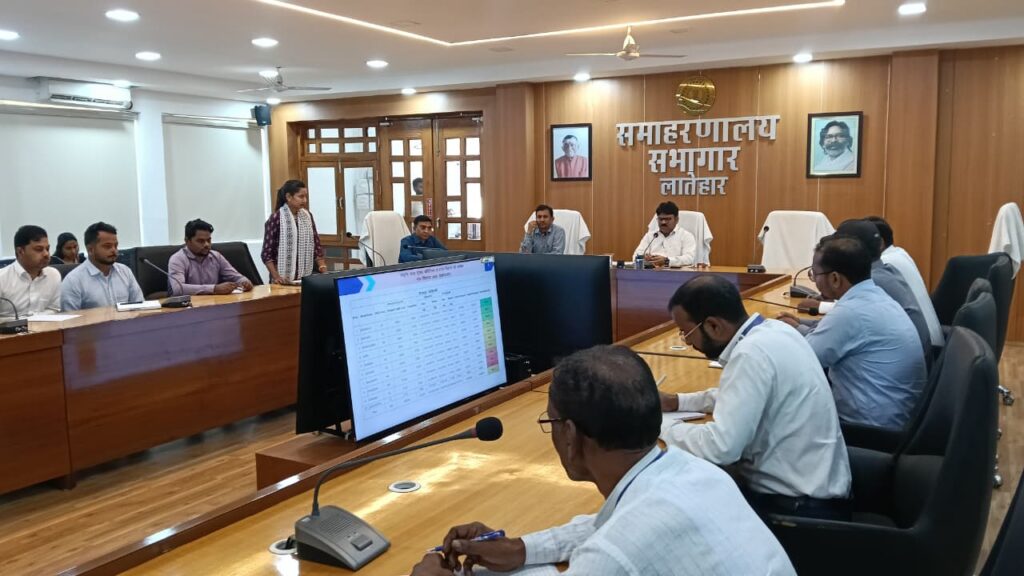
The review brought reported lapses at fair-price shops into focus. According to information presented by the Latehar Block Supply Officer, the ration shop operated by Shramik Self-Help Group in Sukri was found closed during a surprise inspection. Beneficiaries also reportedly complained that they were not receiving ration on time. In a separate case, Suryamukhi Mahila Self-Help Group in Dhankara had allegedly not started distributing November’s ration despite 22 days of the month having elapsed, according to the account placed before the meeting.
DC directed the District Supply Officer to investigate both cases, verify the complaints and initiate appropriate action if irregularities are established. He also ordered regular inspections of public distribution system outlets and stressed that eligible beneficiaries must receive their foodgrains within the prescribed timeframe.
These reports raise questions about the reliability of last-mile delivery, where the effectiveness of food security programmes depends not only on allocations and official records but also on whether ration shops remain accessible and supplies reach households on schedule. The information presented at the meeting, however, did not establish the total number of affected beneficiaries, the duration of the reported delays or whether similar complaints had emerged elsewhere in the district. Block-wise distribution data and records of inspections and corrective action would help determine whether the reported cases are isolated lapses or part of a wider implementation problem.
DC also expressed concern over blocks that had failed to meet distribution targets and directed the Latehar Block Supply Officer to improve performance. He instructed officials to complete October’s foodgrain distribution promptly and warned that continued failure to meet prescribed standards and deadlines could invite departmental action.
Another significant decision concerned ration cards whose holders had not collected foodgrains for six months or a year. Officials were instructed to identify such cards, prepare lists, verify the cases and complete the deletion process within one month in accordance with applicable rules. The directive could help identify duplicate, ineligible or obsolete records, but the verification process will be crucial. Prolonged non-collection does not necessarily establish ineligibility: migration, illness, disability, lack of information or difficulties accessing a ration shop may also prevent a household from collecting its entitlement. Safeguards are therefore necessary to ensure that genuine beneficiaries are not excluded during the exercise.
The administration has simultaneously emphasised the need to issue new ration cards to eligible families and individuals. This parallel approach is important because removing ineligible entries should not become an end in itself. The broader objective must be to ensure that every eligible household can access food security benefits without unnecessary procedural barriers.
The district’s public grievance redressal session offered another illustration of the gap that can arise between identifying a need and delivering assistance. During a separate weekly hearing at the Deputy Commissioner’s office, residents from urban and rural areas presented their complaints. Tholkon Kanwar, a resident of Champa Panchayat in Mahuadanr block, requested a tricycle to improve his mobility. The Deputy Commissioner intervened immediately and arranged for a tricycle to be provided on the spot, offering direct assistance to a person whose daily movement had been a concern.
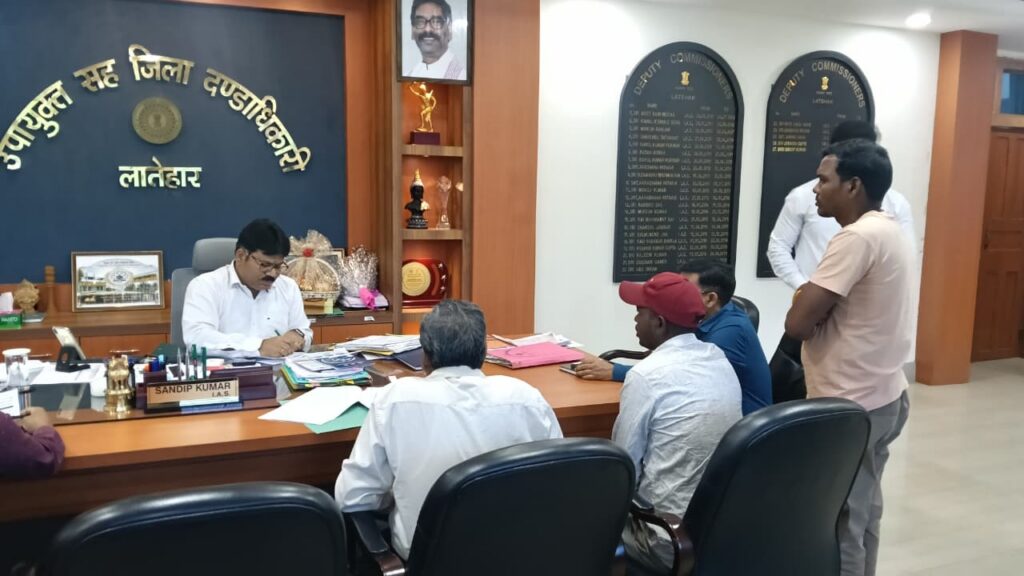
The intervention demonstrated how prompt administrative action can address an individual need without prolonged delay. Yet a single case also points to a wider question: how many other applications for mobility aids, disability-related assistance and welfare benefits remain pending, and how quickly are they being resolved? The administration did not provide consolidated figures on the number of grievances received, pending or resolved during the session.
After hearing other applicants, the Deputy Commissioner directed the concerned departments to conduct physical verification where necessary and resolve genuine complaints promptly in accordance with the rules. Public grievance redressal sessions are held every Tuesday and Friday at district, subdivision and block-level offices. Their impact depends not only on hearing complaints but also on tracking applications, communicating decisions to applicants and ensuring that promised assistance reaches beneficiaries.
The two administrative exercises therefore converge on a common issue: the need for accountable delivery of public services. In the ration system, this means verifying complaints, monitoring fair-price shops, reconciling inactive-card records and protecting eligible households from wrongful exclusion. In grievance redressal, it means ensuring that requests do not remain pending after hearings and that vulnerable residents receive the assistance for which they qualify.
The administration has announced deadlines and corrective directions, but measurable outcomes will be the real test. Publication of block-wise ration distribution figures, inspection findings, verified inactive-card cases, new cards issued and grievance disposal rates would provide a clearer picture of progress. Until such information is available, the scale of the reported problems remains uncertain.
For Latehar, the challenge is not simply to review schemes or issue instructions, but to ensure that food security, disability assistance and other welfare measures reach eligible residents reliably, fairly and on time. The success of the district’s response will be judged by the cases resolved and the people served—not merely by the meetings held.
