In the tribal heartland of Jharkhand, where traditions are often passed from one generation to another through songs, festivals, and folklore, a remarkable cultural renaissance is unfolding in Chirudih village of Tumbad Panchayat. What was once an ordinary rural settlement has today emerged as a vibrant symbol of indigenous pride, women’s empowerment, and heritage conservation. The transformation is visible on every wall. Houses that once stood as plain structures now serve as living canvases, adorned with magnificent Sohrai paintings, one of India’s oldest surviving tribal art traditions.
Far beyond aesthetics, the story of Chirudih is a story of people reclaiming their identity in a rapidly changing world.
The initiative began with a Sohrai painting training programme conducted on 21 October 2024 under the guidance of folk artist Manish Kumar Mahto. What started as a skill-building exercise soon evolved into a community-wide movement. Women, youth, and traditional artists came together to revive an art form that has been an inseparable part of Jharkhand’s tribal civilization for centuries.
Sohrai is not merely a decorative painting style. It is a cultural language. Traditionally practised by women from tribal communities such as the Santhal, Munda, Oraon, Kurmi and other indigenous groups, Sohrai paintings are created during the harvest season as an expression of gratitude towards nature, livestock, fertility, and prosperity. The art adorns the walls of homes during the Sohrai festival, which coincides with the post-harvest period and celebrates the deep relationship between human beings, animals, and the natural world.
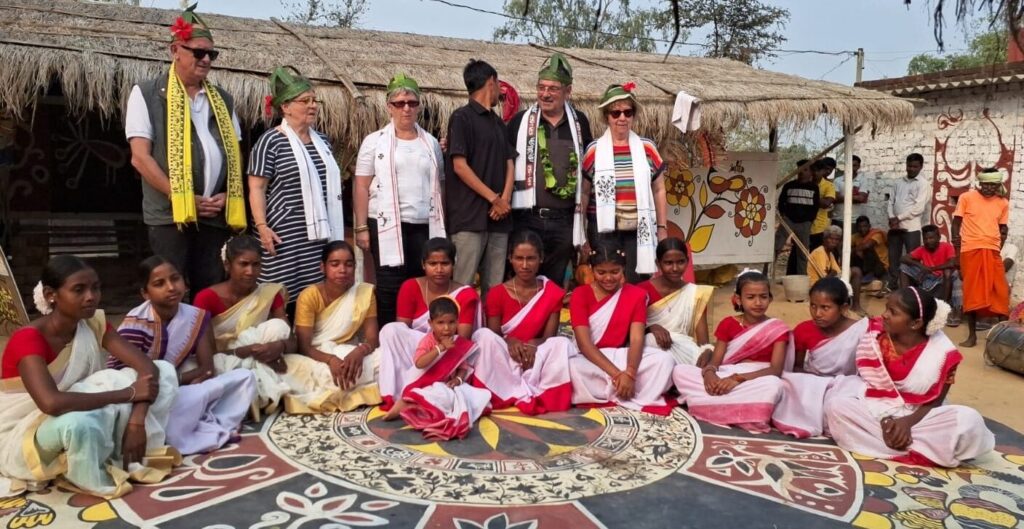
Scholars believe the origins of Sohrai art extend thousands of years into the past. Researchers have observed striking similarities between contemporary Sohrai motifs and prehistoric rock paintings discovered in the Isco caves of Hazaribagh. Some studies trace these visual traditions to ancient rock-art practices dating back several millennia, making Sohrai one of the rare examples of a living artistic heritage that continues to survive in village life today.
Recognizing its cultural significance, the Government of India granted Geographical Indication (GI) status to Sohrai-Khovar paintings in 2020, providing national recognition to this unique artistic legacy of Jharkhand. Against this historic backdrop, the work undertaken in Chirudih assumes even greater importance.
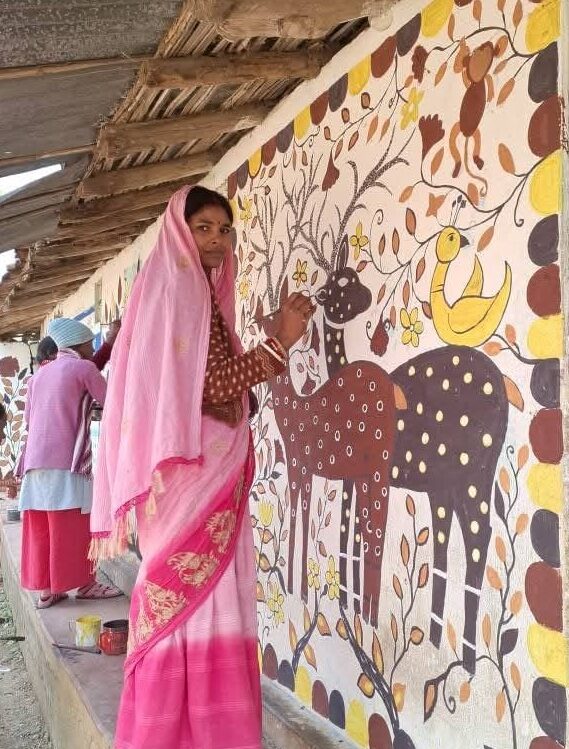
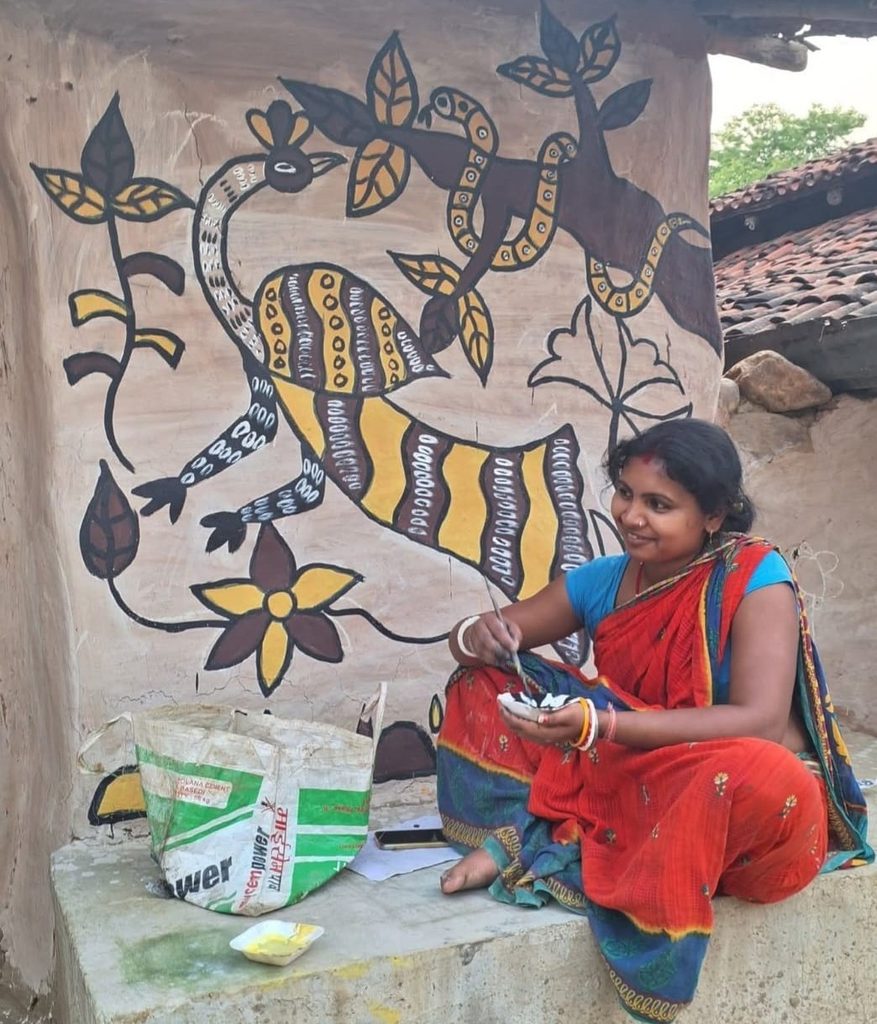
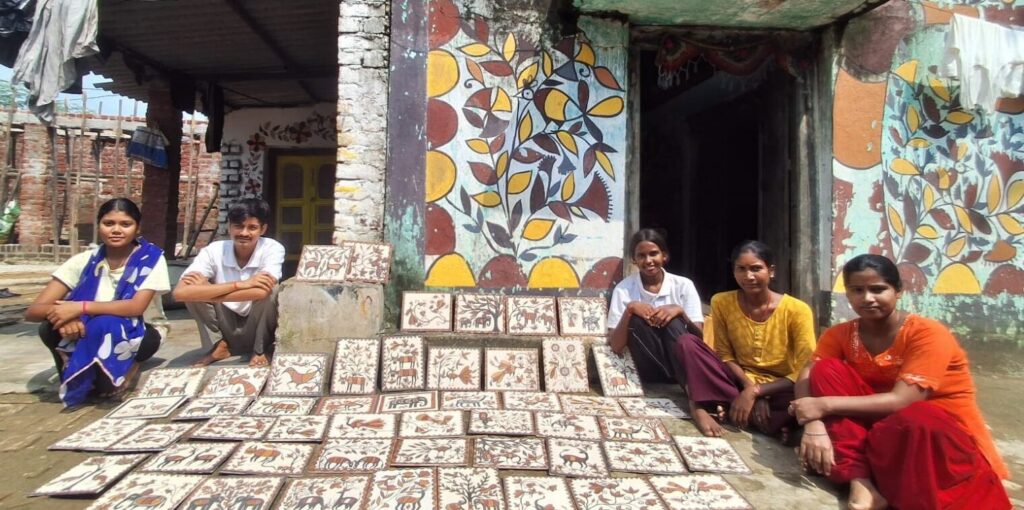
Walking through the village today is like stepping into an open-air museum. Colourful murals stretch across walls depicting elephants, deer, cattle, peacocks, birds, trees, harvest scenes, traditional dances, folk musicians, and tribal rituals. The paintings celebrate coexistence rather than conquest. Animals are not portrayed as separate from human life but as companions in a shared ecological journey.
Unlike contemporary commercial art, Sohrai draws its inspiration from the rhythms of nature. Traditionally, artists create pigments from locally available natural materials such as red ochre, white clay, black earth, yellow clay, charcoal, and mineral colours. The use of natural pigments reflects the sustainable and environmentally conscious worldview of indigenous communities. For the women of Chirudih, however, the project has been about much more than preserving tradition.
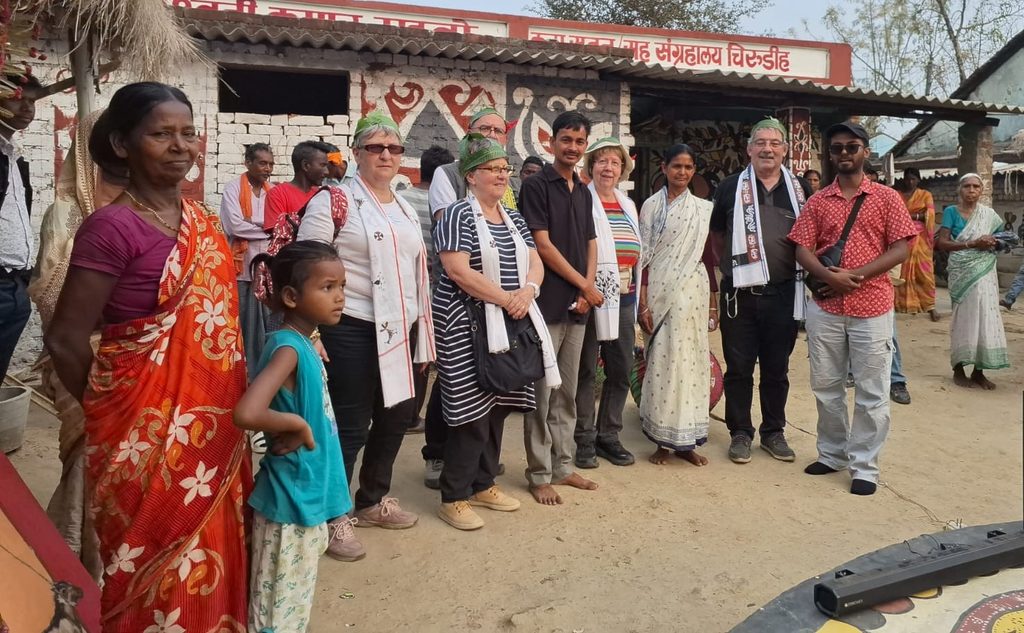
For generations, tribal women carried cultural knowledge without receiving formal recognition for their artistic skills. Their creativity decorated homes during festivals but remained confined within village boundaries. Through the training initiative, many participants discovered that the knowledge inherited from their mothers and grandmothers possessed not only cultural value but also economic potential.
Local artist Kajal Kumari and fellow participants including Rangbala Devi, Sita Kumari, Amrita Kumari, Bharti Devi, Namita Kumari, Bindeshwari Devi, Rina Kumari, Punam Kumari, Anita Kumari, Rekha Rani Mahto, Bebi Devi, Ashish Mahto, Narendra Munda, Pushkar Mahto, Ramesh Munda, Anjali Devi, Mamta Kumari, and Sanjana Kumari have collectively transformed the village landscape through their dedication and artistic labour.
What makes their achievement extraordinary is the collaborative nature of the effort. The artists did not work for individual recognition. Instead, they painted together, planned together, and dreamt together. Every mural became a symbol of collective ownership and shared heritage.
Children growing up in Chirudih now encounter visual representations of their own history and culture on a daily basis. Rather than learning about tribal traditions solely through textbooks, they experience them through living art. Elders see familiar stories reflected on village walls, while younger generations gain a renewed appreciation for their roots.
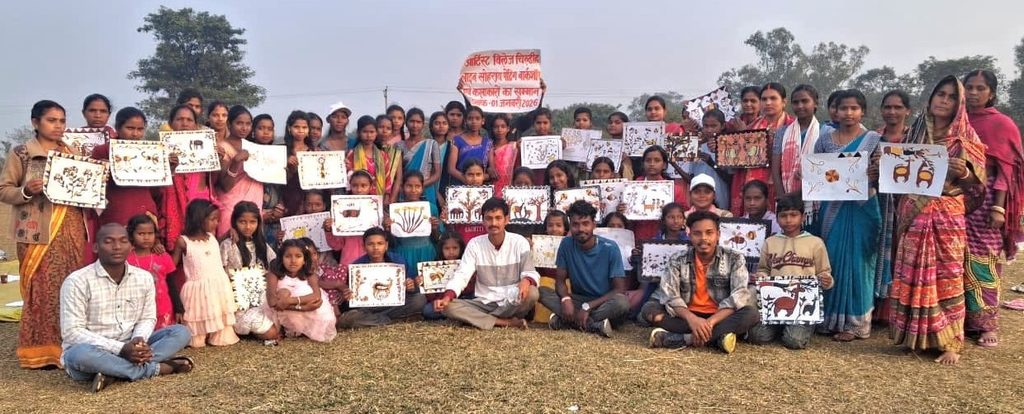
In many parts of India, traditional folk arts face the threat of extinction due to migration, urbanization, and changing lifestyles. Ancient skills are often abandoned because they are perceived as economically unviable. Chirudih challenges that narrative. The village demonstrates that heritage preservation and economic development can go hand in hand.
As rural tourism and cultural tourism gain momentum across India, villages with strong artistic identities are increasingly attracting attention from visitors, researchers, photographers, and cultural institutions. The painted walls of Chirudih have the potential to become not only a source of pride but also a catalyst for sustainable livelihood opportunities.
Moreover, the initiative embodies the spirit of women-led development. By placing women at the center of cultural preservation, it challenges conventional notions of leadership and community development. The artists are not merely painters; they are custodians of memory, educators of future generations, and protectors of an ancient worldview that values harmony over exploitation.
At a time when globalization often erodes local identities, the village has chosen preservation over forgetting. It has shown that progress does not require abandoning tradition. Instead, tradition itself can become a vehicle for progress.
Every painted deer, bird, tree, and harvest motif on the walls of Chirudih tells a story of resilience. Every brushstroke speaks of a civilization that continues to thrive despite the pressures of modernity. Every mural stands as a reminder that cultural heritage is not a relic of the past but a living force shaping the future.
The vision of Manish Kumar Mahto and the tireless efforts of the village artists, Chirudih has become more than just a village. It has become a symbol of cultural revival, social empowerment, environmental consciousness, and community-led transformation.
Today, as sunlight falls upon the colourful Sohrai murals that cover its walls, Chirudih proudly announces a message to the world: the heritage of Jharkhand is alive, thriving, and being safeguarded by the very communities that inherited it centuries ago. In those paintings lives not only art, but also identity, dignity, history, and hope for generations yet to come.